Ski Touring in Kyrgyzstan (while it's still like this)

Updated: Apr 13
1. Why Kyrgyzstan
The search for cool ski adventures goes on. It usually leads to places that tick the same boxes, like vast mountain ranges, epic terrain, few people and potentially interesting culture.
That’s how Kyrgyzstan came up.
Besides yurts, horses and eagle hunting, a quick search can tell you that it's a historically nomadic country, shaped in part by the Silk Road, where routes connected East Asia with the West through mountain passes that still feel impossible today. It went through multiple occupations and only became independent after the collapse of the Soviet Union.
The excitement of going to one of the “stans” for the first time was real. But booking it fast, without much time to dig deeper, made it hard to know what to expect.
2. Skiing is what brought us here
When most of the country is mountains, you need to keep things simple. The plan was to base ourselves in Jyrgalan, in the far east, and add a few side quests towards Karakol and the Barskoon Gorge before and after the main chunk of the trip.
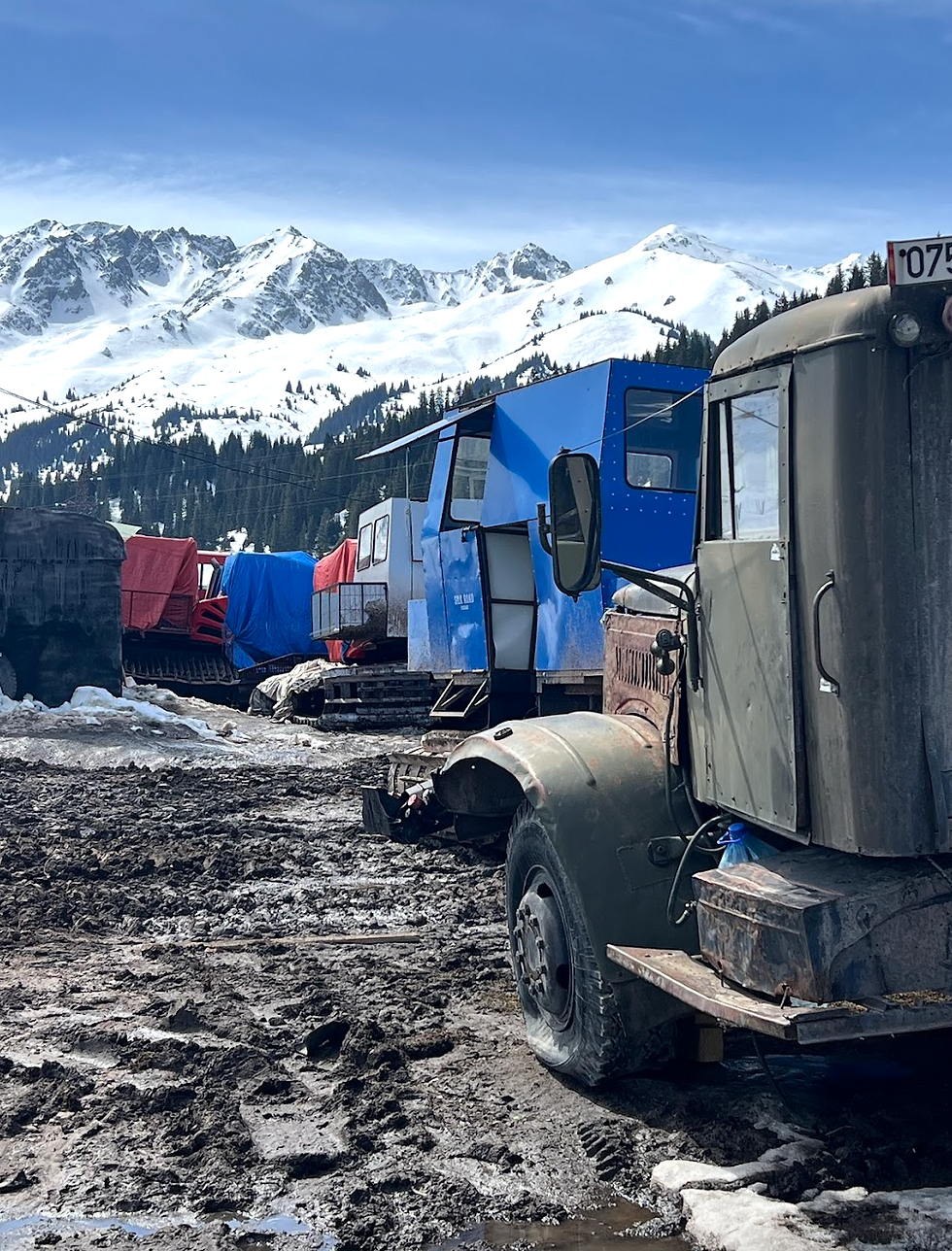
It turned out to be the right call. Jyrgalan quickly revealed itself as the spot. From the village, you can move directly into multiple valleys, or use snowmobiles to reach yurt camps deeper inside, opening access to an even wider range of peaks.
Across all these zones, what stands out is the scale. You start to feel like a kid in an amusement park, with more terrain than you could explore in a lifetime. At the same time, the snowpack brings you back to reality. A persistent weak layer means you naturally stay away from steeper faces, where avalanche risk becomes a real factor.
But with the right local knowledge, that limitation shifts. What initially feels restrictive becomes something you learn to work with.
3. Jyrgalan
Jyrgalan is remote, still largely untouched by modern development, and yet it works as a base in a very natural way.
It used to be a Soviet coal mining village, with around five thousand people at its peak. When the Soviet Union collapsed, the mine shut down and largely disappeared. Today, only a few hundred people remain.
It’s not just what was lost that stands out, but what is slowly taking its place.
Tourism is becoming part of the village’s rhythm. Guesthouses have appeared, mostly small and family-run. Here, that term is quite literal, as you share the space and daily life with the family hosting you, from the coal stove to the bathroom. It’s simple, but it works.
From muddy streets, cows roaming freely, and people commuting on horses, to a surprisingly large number of kids running around and waving at you for your exoticness, daily life in Jyrgalan feels both simple and alive. There is a peacefulness to it, something grounded and traditional, but you can also feel it bending slightly towards something new.

People are extremely welcoming in a natural way, without any sense of performance, and it’s something you feel across the whole country.
There are also clear signs of more structured ski development in the area. A large-scale project backed by the government and foreign private capital is already underway, built around three main peaks near Jyrgalan, with the ambition of becoming the largest ski resort in Central Asia.
Lift infrastructure, hotels, restaurants, spas, the full setup of a modern resort, all being planned at a scale that’s hard to ignore.
A few kilometres away from the village, it inevitably raises the question of how something like this might reshape the area.
4. Moving around
Enormous ski projects aside, getting around Kyrgyzstan was more straightforward than expected.
If you ignore the occasional wild card that shows up along the way and the fact that beautiful asphalt roads can shift to dirt in an instant, navigation and travel times stay surprisingly accurate, even in more remote areas.
You definitely feel the distance and remoteness, but you’re not fighting to move through it. A car with a solid suspension is strongly recommended though.
5. Life around
When you need to set up and take down camp on a regular basis, life is probably not easy, but it can be simple. A strong bond with animals, a real appreciation for the roof over your head, and a strong sense of community, often centred around food.

You can still feel that today. Horses move along the roads as part of daily routines, and many homes still revolve around a single coal stove that heats, cooks, and gathers people in one place. The food follows the same idea, meant to be shared and sitting at the centre of it all, sometimes feeling closer to China, other times more like Eastern Europe.
That community-focused way of living carries through into how people are, and they’re genuinely welcoming. You feel it quickly. What takes more effort is communication, as English can be quite rare. Translation tools can work, but they don’t fully close the gap.
6. What stays
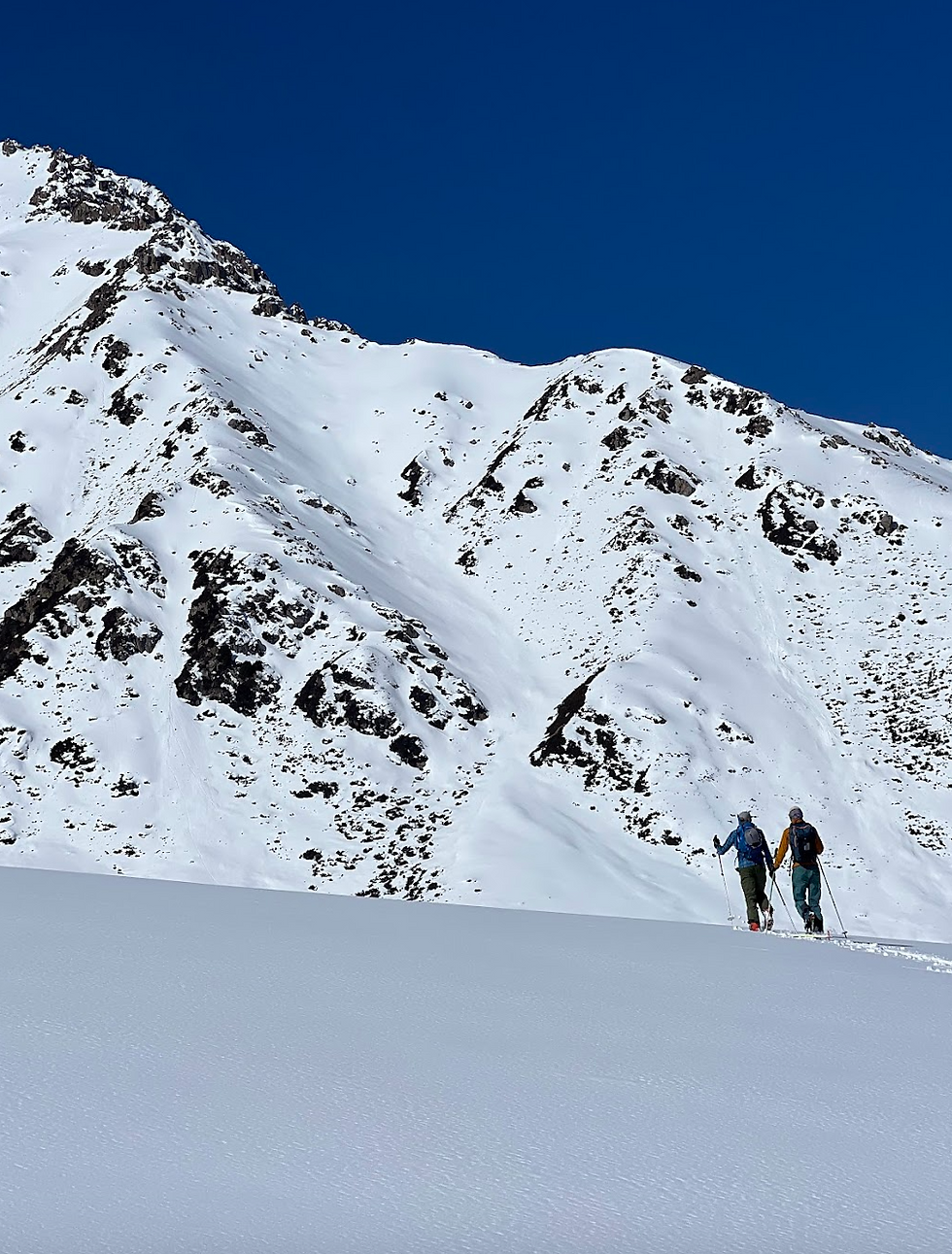
Kyrgyzstan stays with you for the obvious reasons. The scale, the peacefulness, the people, and the feeling that you could keep exploring without really running out of terrain.
There was also a constant feeling that things were starting to shift.
Tourism is quickly becoming one of the country’s key directions, not just as an idea but as a real part of the economy, especially in more remote regions. You can feel it on the ground. Construction everywhere. Roads, and then more roads. Small renovations, bigger ones, new guesthouses, the occasional polished café in places you wouldn’t expect, and conversations about younger people starting to move into tourism.
It doesn’t feel like a place stuck in time.
Larger projects are starting to take shape, and it’s hard not to wonder how they might reshape the place.
Things are clearly moving. Not in a defined way, not all in the same direction, but forward. Enough to make you curious about what this place might look like in a few years, and maybe just early enough to experience it before those vast, untracked faces start to disappear.


Comments